
In the world of textiles and apparel, few things are as disappointing as a favorite shirt that fades after a few washes or a vibrant sofa cover that bleeds onto adjacent fabric. For manufacturers, brands, and quality control professionals, preventing these failures is paramount. This is where the Washing Color Fastness Test becomes an indispensable tool. In this comprehensive guide, we’ll explore what this test is, why it’s critical, how it’s performed, and the role of advanced equipment like the WashTrue Washing Color Fastness Tester in upholding industry standards.
What is Washing Color Fastness?
Color fastness refers to a fabric’s resistance to color loss or transfer under various conditions. Specifically, washing color fastness measures how well a dyed or printed textile maintains its original hue when subjected to laundering processes. It evaluates two primary aspects:
- Color Change: The fading or alteration of the original fabric’s color.
- Staining: The degree to which the fabric’s dye bleeds and stains adjacent (multi-fiber or white) fabric placed alongside it during the test.
A high color fastness rating means the fabric will look newer for longer and won’t ruin other items in the wash—a key selling point for consumers and a critical quality benchmark for brands.
Why is Testing Washing Color Fastness So Important?
- Consumer Satisfaction & Brand Protection: Fading or bleeding garments lead to returns, negative reviews, and brand damage. Consistent quality builds trust and loyalty.
- Compliance with Global Standards: Regulations and standards like AATCC, ISO, and GB/T mandate specific color fastness levels for different product categories (e.g., children’s wear, upholstery).
- Supply Chain Verification: Brands use these tests to audit material suppliers, ensuring every component, from fabric to thread, meets specification before mass production.
- Product Development: Testing helps chemists develop better dyes and finishing processes to improve performance.
How is the Washing Color Fastness Test Performed? A Step-by-Step Look
The test simulates domestic or industrial laundering under controlled, reproducible conditions. Here’s a generalized overview of the procedure based on common standards like AATCC Test Method 61 or ISO 105-C06:
- Sample Preparation:
- A swatch of the test fabric is cut to a specified size.
- It is stitched or placed in intimate contact with one or two pieces of standard multifiber adjacent fabric (containing wool, acrylic, polyester, cotton, etc.) or white fabric swatches to assess staining on different fiber types.
- Test Solution & Canister Loading:
- The composite sample is placed inside a stainless steel canister (Launder-Ometer pot) along with a specified volume of detergent solution and, sometimes, steel balls to provide abrasive action.
- Multiple canisters are loaded onto the rotating spindle of the washing color fastness tester.
- The Washing Cycle:
- The tester is set to a precise temperature (e.g., 40°C for cold wash, 60°C for warm wash) and time (typically 30 or 45 minutes). The canisters rotate in the thermostatically controlled water bath, simulating the mechanical action of a washing machine.
- Rinsing & Drying:
- After the cycle, samples are rinsed (often by a specified method) and dried.
- Evaluation – The Crucial Step:
- Color Change: The dried test fabric is compared to an original, untested sample under standard lighting (e.g., a light booth) using the Grey Scale for Color Change. Ratings range from 5 (no change) to 1 (severe change).
- Staining: The white/adjacent fabric is compared to an unstained sample using the Grey Scale for Staining. Ratings range from 5 (no staining) to 1 (severe staining).
Key Standards and Grading Scales
- AATCC (American Association of Textile Chemists and Colorists): Widely used in North America. Key method: AATCC TM61 – “types of Colorfastness to Laundering, Home and Commercial: Accelerated.”
- ISO (International Organization for Standardization): Globally recognized. Key method: ISO 105-C06 – “Color fastness to domestic and commercial laundering.”
- Grey Scales: The universal tools for visual assessment. Digital spectrophotometers are also increasingly used for objective, numerical evaluation.
Factors Affecting Washing Color Fastness
- Fiber Type: Natural fibers like cotton and wool can be more challenging to dye fast than synthetics like polyester.
- Dye Selection & Application: The chemical structure of the dye and the thoroughness of the dyeing process are fundamental.
- Fabric Construction & Finishes: Post-dye treatments (e.g., fixing agents, softeners) can greatly enhance fastness.
The Role of Precision Testing Equipment: Introducing the WashTrue Tester
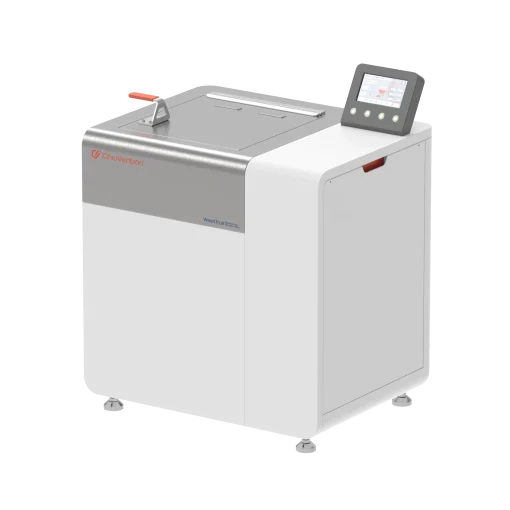
Consistent, reliable results are impossible without precise and durable equipment. This is where a professional-grade instrument like the WashTrue Washing Color Fastness Tester becomes essential.
Based on the design principles of industry-standard Launder-Ometers, a high-quality tester like the WashTrue provides:
- Standard Compliance: Engineered to meet the exact mechanical and thermal requirements of AATCC, ISO, JIS, and GB/T standards.
- Superior Control & Uniformity: Features a digital PID temperature controller and a stainless steel heating tube for exceptional temperature stability and uniformity (±1°C) across all test pots. This eliminates a major variable.
- Robust Construction: Made with premium 304/316 stainless steel for the bath chamber, canisters, and heating elements, ensuring corrosion resistance and long-term durability, even with harsh chemical solutions.
- Enhanced Safety & Usability: Modern models include features like a digital timer with auto-shutoff, a transparent, insulated bath cover for observation and heat retention, and a leak-proof canister design.
- Efficiency: Capable of testing multiple samples simultaneously under identical conditions, which is vital for high-throughput QA labs.
For any company serious about quality, investing in a reliable tester is not an expense—it’s a safeguard for brand reputation and consumer satisfaction.
Conclusion
The Washing Color Fastness Test is a non-negotiable checkpoint in the lifecycle of any textile product. It bridges the gap between laboratory development and real-world use, ensuring that colors remain vibrant and contained through repeated laundering. By adhering to standardized test methods and employing precise, reliable equipment such as the Washing Color Fastness Tester, manufacturers and brands can deliver on their quality promises, reduce waste from faulty products, and ultimately, build garments and textiles that truly stand the test of time.