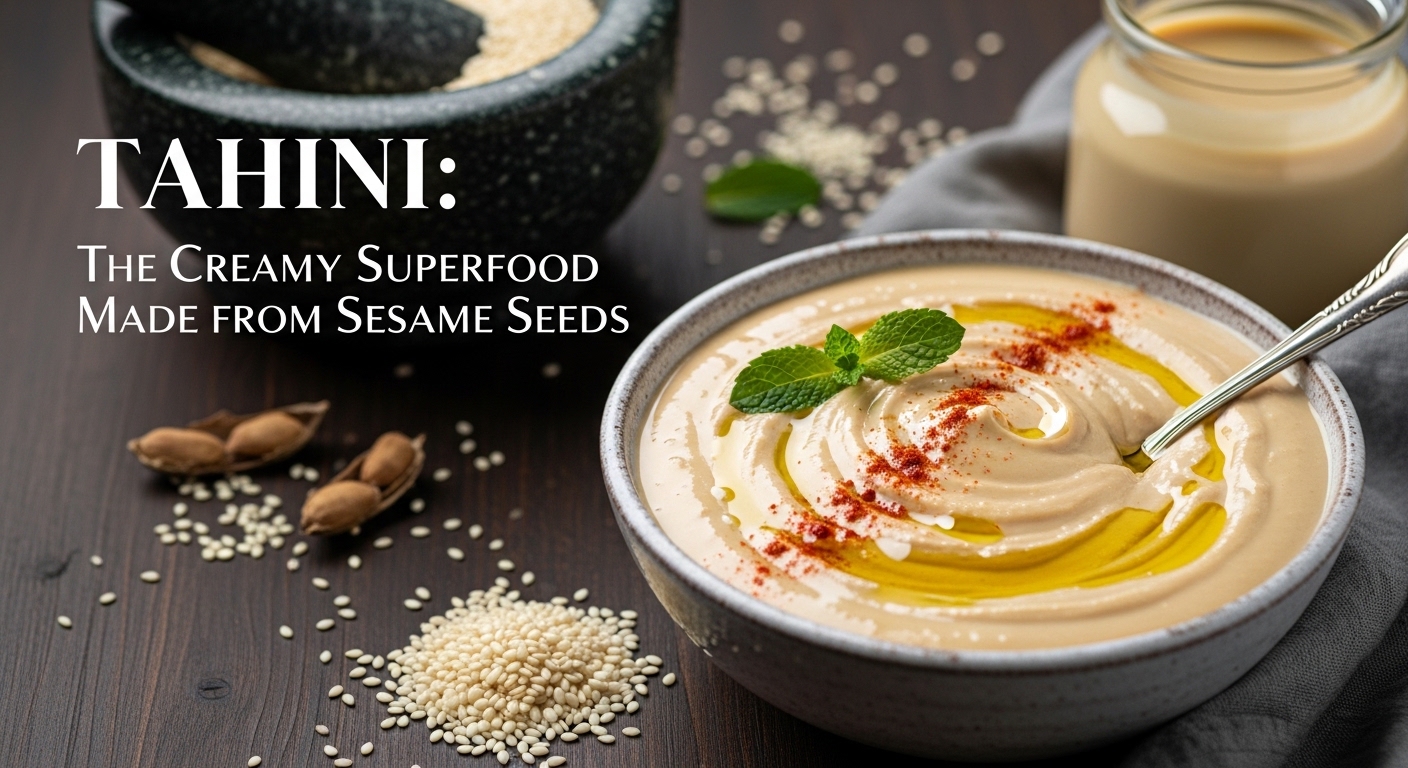
Tahini (sometimes spelled tahini, tahin, or tahhiini) is a rich, creamy paste made from ground sesame seeds. A staple in Middle Eastern and Mediterranean cuisine, tahini has gained global popularity thanks to its smooth texture, nutty flavor, and impressive nutritional profile.
From hummus to salad dressings, desserts to sauces, tahini is one of the most versatile ingredients in modern kitchens.
What Is Tahini?
Tahini is made by grinding toasted or raw sesame seeds into a thick, oil-rich paste. It is commonly used in traditional dishes across the Middle East, North Africa, and the Mediterranean.
One of the most famous dishes featuring tahini is Hummus, where it is blended with chickpeas, garlic, lemon juice, and olive oil to create a creamy dip loved worldwide.
Nutritional Benefits of Tahini
Tahini is more than just delicious — it’s packed with nutrients:
✔ Healthy Fats
Tahini contains heart-healthy unsaturated fats that support cardiovascular health.
✔ Plant-Based Protein
A great protein source for vegetarians and vegans.
✔ Rich in Minerals
Tahini provides:
-
Calcium
-
Magnesium
-
Iron
-
Zinc
✔ Antioxidants
Sesame seeds contain lignans and antioxidants that help fight oxidative stress.
Because of its nutrient density, tahini is often considered a natural superfood.
How Tahini Is Made
Traditional tahini production involves several steps:
-
Soaking sesame seeds to remove their hulls (optional).
-
Toasting the seeds lightly to enhance flavor.
-
Grinding the seeds into a smooth paste.
-
Stirring to create a creamy, pourable consistency.
Some varieties use raw sesame seeds for a milder flavor, while others use roasted seeds for a deeper, nuttier taste.
Popular Dishes Made with Tahini
🥙 Hummus
Tahini gives hummus its creamy texture and rich taste.
🧆 Falafel
Falafel is often served with tahini sauce as a topping or dip.
🥗 Tahini Salad Dressing
Mixed with lemon juice, garlic, and water, tahini becomes a smooth dressing for salads and roasted vegetables.
🍰 Tahini Desserts
Tahini is also a key ingredient in Halva, a sweet confection popular in many cultures.
Types of Tahini
There are generally two main types:
1. Hulled Tahini
Made from sesame seeds with the outer hull removed. It’s lighter in color and milder in taste.
2. Unhulled Tahini
Contains the whole seed, offering a stronger flavor and slightly more nutrients.
Both varieties have their own culinary uses depending on the recipe.
How to Use Tahini at Home
Tahini is extremely versatile. You can:
-
Drizzle it over roasted vegetables
-
Blend it into smoothies
-
Use it as a peanut butter alternative
-
Add it to sauces and marinades
-
Stir it into soups for creaminess
Because it naturally separates (oil rises to the top), simply stir it before using.
Is Tahini Healthy?
Yes — when consumed in moderation. Although tahini is calorie-dense due to its fat content, those fats are primarily healthy unsaturated fats. It is also naturally gluten-free and suitable for plant-based diets.
People with sesame allergies, however, should avoid tahini.
Storage Tips
-
Store in a cool, dry place before opening.
-
After opening, refrigerate to extend shelf life.
-
Always stir before use to maintain consistency.
Properly stored tahini can last several months.
Final Thoughts
Tahini is a nutrient-rich, versatile ingredient that enhances both savory and sweet dishes. Whether blended into hummus, drizzled over falafel, or incorporated into desserts, tahini brings depth, creaminess, and health benefits to countless recipes.
Its growing popularity worldwide proves that this ancient sesame paste has truly stood the test of time.
FAQs About Tahini
Q1: Is tahini the same as sesame butter?
Yes, tahini is essentially sesame seed butter.
Q2: Can I eat tahini every day?
Yes, in moderate amounts as part of a balanced diet.
Q3: Why does tahini taste bitter?
Some bitterness may come from over-toasted seeds or unhulled varieties.