
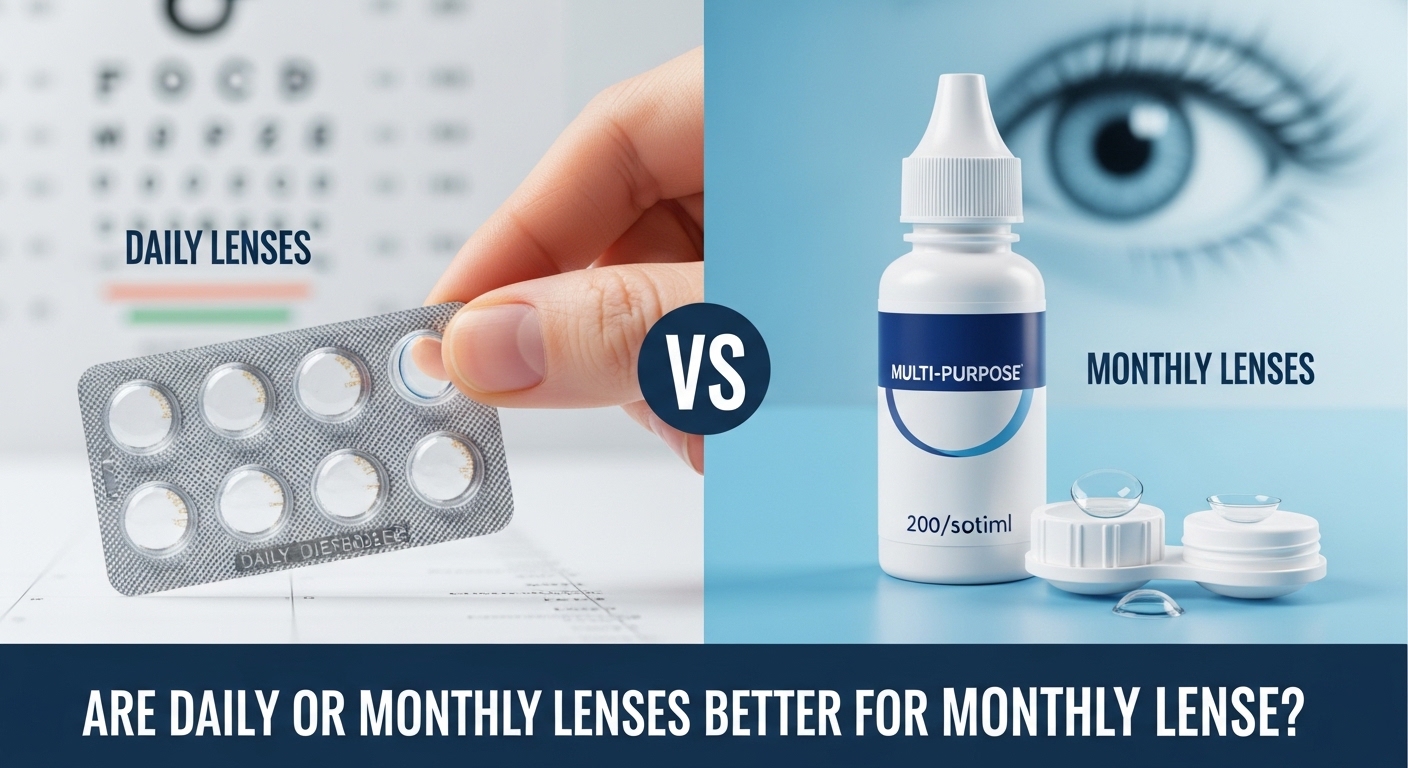
Choosing contact lenses is not just about improving eyesight. It is about protecting your eye health, ensuring daily comfort, and selecting an option that fits smoothly into your lifestyle. One of the most common questions people ask is whether daily or monthly contact lenses are better for their eyes. Both options are safe and effective, but the right choice depends on how often you wear lenses, how sensitive your eyes are, and how much time you can dedicate to lens care.
Many users assume one option is automatically better than the other, but in reality, each type serves a different purpose. Understanding how daily and monthly lenses work, and how they affect your eyes over time, can help you make a confident and informed decision.
Understanding Daily Contact Lenses
Daily lenses are designed for single use. You wear a fresh pair in the morning and dispose of them at the end of the day. There is no need for cleaning, storing, or disinfecting. This makes daily lenses one of the simplest and most hygienic options available.
Because a new lens is used every day, there is no build-up of protein deposits, dust, or bacteria. This greatly reduces the risk of irritation and infection. For people who value convenience and eye cleanliness, daily lenses are often the preferred option. Many eye care professionals recommend daily contact lenses for users who want a low-maintenance and eye-friendly solution.
Daily lenses are also ideal for people who only wear contact lenses occasionally, such as during social events, sports, or travel.
Understanding Monthly Contact Lenses
Monthly lenses are reusable lenses designed to be worn for up to 30 days. After each use, they must be cleaned with lens solution and stored in a proper case. When handled correctly, monthly lenses provide consistent comfort and clear vision throughout the month.
These lenses are popular among full-time contact lens wearers because they are more cost-effective over time. Modern monthly lenses are made from advanced materials that allow oxygen to reach the eyes, helping maintain eye health during long wear hours. For regular users who do not mind a simple daily cleaning routine, monthly contact lenses offer a reliable and economical option.
Eye Hygiene and Safety Comparison
Hygiene is one of the most important factors when choosing contact lenses. Daily lenses have a clear advantage because they are never reused. Each day starts with a fresh, sterile lens, which significantly lowers the risk of eye infections.
Monthly lenses are also safe, but only when proper cleaning habits are followed. Skipping cleaning steps or extending lens use beyond the recommended period can allow bacteria and protein deposits to build up. For people with sensitive eyes, allergies, or a history of eye irritation, daily lenses usually provide better overall comfort and peace of mind.
Comfort for Long Daily Wear
Comfort is essential, especially for people who wear contact lenses for long hours at work or while using digital screens. Daily lenses feel fresh throughout the day because they have not been worn before. This often results in less dryness and irritation by evening.
Monthly lenses can also be very comfortable, particularly silicone hydrogel lenses that allow high oxygen flow. However, their comfort depends on how well they are cleaned and how close they are to the end of their monthly replacement cycle. Some users notice reduced comfort toward the end of the month if lenses are not cared for properly.
Maintenance and Responsibility
One of the biggest differences between daily and monthly lenses is the level of responsibility required. Daily lenses require no maintenance at all. You simply wear and dispose of them, which makes them ideal for busy lifestyles.
Monthly lenses require consistent care. You must clean them every night, replace the solution regularly, and change the lens case frequently. While this routine is simple, it does require discipline. If you are comfortable following a care routine, monthly lenses can work very well for you.
Cost Considerations Based on Usage
Cost is often a deciding factor. Daily lenses may appear more expensive at first because you use a new pair every day. However, for occasional wearers, daily lenses can actually be more affordable since you only pay for what you use.
Monthly lenses are generally cheaper for people who wear contact lenses every day. One pair lasts an entire month, making them cost-effective for regular use. It is important to consider the added cost of cleaning solution and cases when comparing prices, but even then, monthly lenses often remain the more economical option for full-time wearers.
Travel and Lifestyle Convenience
For travelers, convenience matters a lot. Carrying lens solution and cases can be inconvenient, especially on short trips. This is why many travelers prefer daily contact lenses. You can pack the exact number of lenses you need and avoid worrying about cleaning routines while away from home.
Monthly lenses are better suited for people with stable routines who do not mind carrying extra supplies. For frequent travelers or people with unpredictable schedules, daily lenses often provide more flexibility.
Environmental Impact
Environmental concerns are becoming increasingly important. Daily lenses generate more waste because each pair is disposed of after one use, along with individual packaging.
Monthly lenses create less physical waste since only one pair is discarded each month. Although cleaning solution is required, many users consider monthly lenses a slightly more environmentally friendly option compared to daily disposables.
Beginners vs Experienced Users
For beginners, daily lenses are usually easier to manage. There is no need to learn cleaning techniques or storage rules, which reduces the chance of mistakes during the learning phase.
Monthly lenses are better suited for experienced users who understand proper hygiene practices and are comfortable maintaining a care routine. Many people start with daily lenses and later switch to monthly lenses once they feel confident.
Sensitive Eyes and Allergies
People with sensitive eyes or seasonal allergies often benefit more from daily lenses. Since a fresh lens is used each day, there is less chance of allergen or deposit build-up that can irritate the eyes.
Monthly lenses may sometimes cause discomfort for sensitive users if not cleaned thoroughly. For this reason, eye specialists often recommend daily lenses for patients with recurring eye irritation or dryness.
Choosing Based on Your Lifestyle
Your lifestyle plays a major role in determining which lenses are better for your eyes. Busy professionals and students often prefer daily lenses because they save time and effort. People who wear lenses all day, every day, often choose monthly lenses for their affordability.
Occasional wearers benefit more from daily lenses, while environmentally conscious users may lean toward monthly lenses. There is no one-size-fits-all answer, only what works best for your routine.
Safety and Proper Usage
Both daily and monthly lenses are safe when used correctly. Most eye problems occur due to misuse, such as wearing lenses longer than recommended or ignoring cleaning instructions.
Daily lenses reduce risk because there is no reuse involved. Monthly lenses require careful handling and strict replacement schedules. No matter which option you choose, following professional guidelines is essential for maintaining healthy eyes.
Final Decision: What Is Better for Your Eyes?
The best contact lenses for your eyes depend on how you live your life and how much care you are willing to provide. If you want maximum hygiene, comfort, and convenience with no maintenance, daily lenses are an excellent choice.
If you wear lenses every day, want to save money, and are comfortable with proper care, monthly lenses can be just as healthy and effective. Many regular users trust monthly contact lenses for long-term daily wear.
Final Thoughts
Daily and monthly contact lenses are both safe, effective, and comfortable when used correctly. The key is choosing the option that matches your lifestyle, eye sensitivity, and habits. By understanding the differences and using lenses responsibly, you can enjoy clear vision and healthy eyes every day.