When we think of Italian history, our minds usually drift to the Colosseum in Rome, the canals of Venice, or the art of Florence. But if you are a food lover, there is a historical treasure hidden in the attics of a small town in the Emilia-Romagna region that rivals any Renaissance painting.
Modena is a city of contradictions. On one hand, it is the home of Ferrari and Maserati—icons of speed and modern engineering. On the other hand, it is the home of a culinary tradition that requires agonizing slowness. We are talking about “Black Gold,” the traditional balsamic vinegar that has been produced by local families for centuries.
This isn’t just a condiment; it’s a time capsule. And understanding how it gets from a grape to your bottle is one of the most fascinating stories in the culinary world.
A Process That Cannot Be Rushed
In a world of instant gratification, the production of authentic balsamic vinegar is a rebellious act of patience. It starts with simple ingredients: grapes. Specifically, Trebbiano and Lambrusco grapes grown in the Modena countryside.
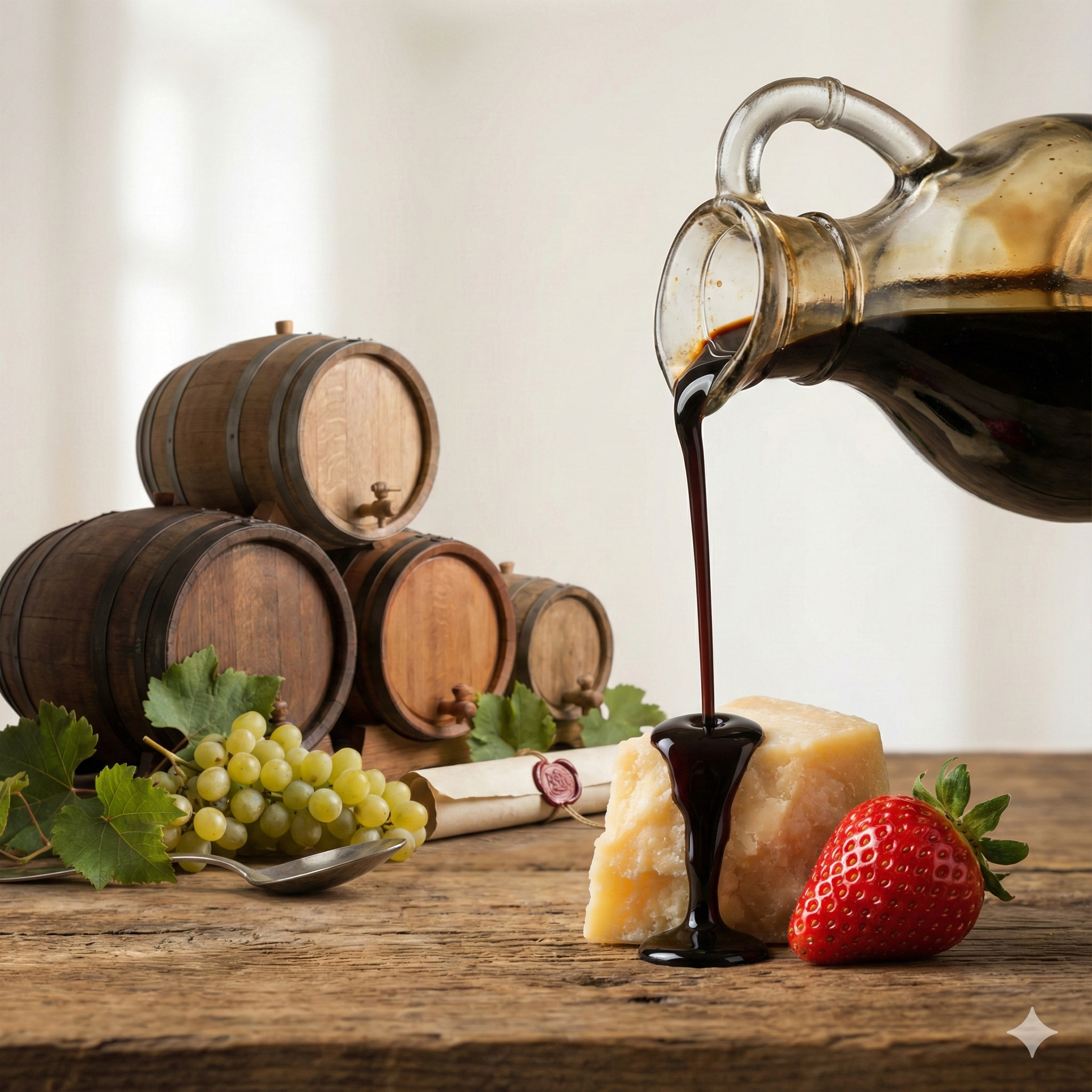
Unlike wine, which is fermented in cellars, this product is born in the attic. The grape juice (must) is cooked down in open cauldrons until it concentrates. Then, it is placed in wooden barrels. And there it sits.
The magic happens thanks to the unique climate of Modena. The attics (or acetaie) are scorching hot in the summer and freezing cold in the winter. This extreme temperature fluctuation causes the liquid to ferment and evaporate, slowly thickening and absorbing the flavors of the wood.
The Battery of Barrels
A true master vinegar maker doesn’t just use one barrel. They use a “battery”—a set of five or seven barrels of decreasing size, each made from a different wood.
- Oak for vanilla notes.
- Chestnut for tannins and color.
- Cherry for fruity sweetness.
- Juniper for spicy aromatics.
- Mulberry for breathability.
As the vinegar evaporates over the years, it is transferred from the larger barrels to the smaller ones. It is a continuous cycle of topping up and blending that can last for 12, 25, or even 100 years.
A Legacy Dating Back to 1605
While balsamic vinegar has deep roots in the region’s folklore, establishing a standard of excellence required centuries of dedication. This is where the Giusti family enters the story. Established in 1605, they are recognized as the oldest producer of balsamic vinegar in the world still in activity.
The family didn’t just produce vinegar; they helped refine the method. For over 17 generations, they have maintained the complex system of aging, earning recognition at 19th-century World Fairs and serving the Royal House of Savoy.
Today, that history is accessible to everyone. When you sample a balsamic vinegar of Modena by Giusti, you are experiencing a standard of quality that has survived wars, changing borders, and centuries of history. It offers a distinct profile—notes of plum, black cherries, and a hint of ancient wood—that connects the modern table to the Renaissance era.
How to Respect the Ingredient
Because this product is so rich in history and flavor, it should be treated with a little respect. The biggest mistake people make is treating it like ordinary cider vinegar.
If you have a high-quality, aged balsamic, do not use it to make a salad dressing where it gets lost in oil and salt. And definitely do not cook with it in a pan, as the heat will destroy the delicate nuanced aromas that took decades to create.
Simple Pairings for Maximum Impact
The best way to enjoy it is as a “finishing” element. Here are three simple ways to let the history shine on your plate:
- The Parmigiano Reggiano Chunk: Take a nugget of aged Parmesan cheese and add one or two drops of thick balsamic. The salty, grainy texture of the cheese combined with the sweet acidity of the vinegar is a perfect bite.
- The Strawberry Bowl: Fresh strawberries are naturally sweet, but a drizzle of balsamic adds a depth that makes them taste even riper. It sounds strange, but it is a classic Italian dessert.
- Creamy Risotto: Make a simple Risotto alla Parmigiana (cheese risotto). Right before serving, drizzle a “Z” shape of balsamic over the hot rice. The contrast between the hot, creamy rice and the cool, sharp vinegar is unforgettable.
A Souvenir You Can Eat
History doesn’t always have to be in a museum behind glass. Sometimes, it comes in a bottle. The tradition of Modena is a reminder that good things really do come to those who wait. Whether you are a professional chef or just someone who loves a good dinner, adding this “Black Gold” to your repertoire is the easiest way to bring a piece of Italian heritage to your table.