Garden rooms have become increasingly popular in recent years, offering homeowners a versatile way to add extra living or working space without the expense and disruption of a traditional extension. Whether you’re creating a home office, gym, studio, or relaxation space, a garden room can significantly enhance your property’s functionality and value. However, before starting your project, it’s important to understand the rules surrounding planning permission.
One of the most common questions homeowners ask is whether they need planning approval before installing a garden room. The answer depends on several factors, including the size, height, location, and intended use of the structure.
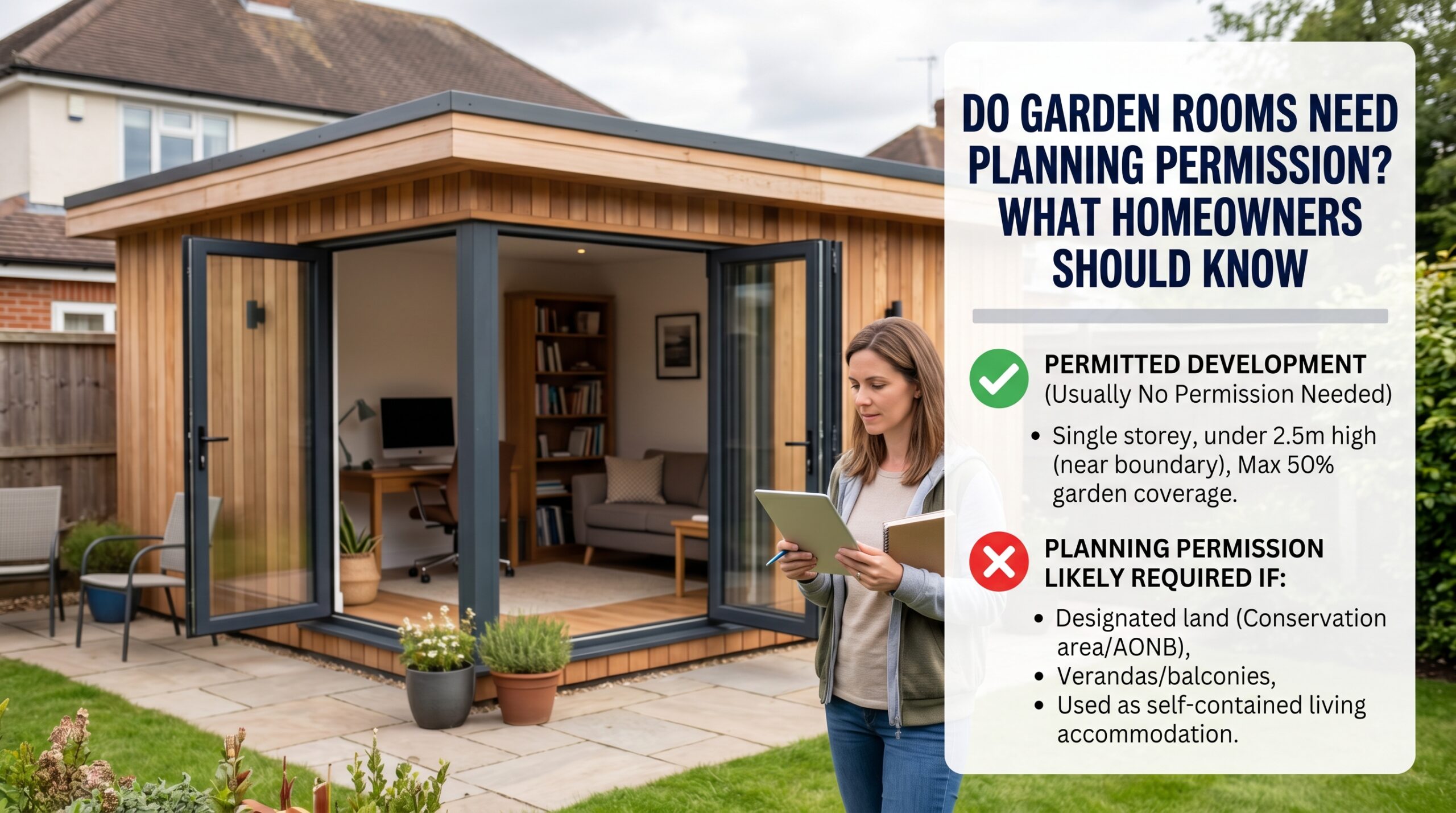
In many cases, garden rooms fall under what is known as “permitted development rights.” These rights allow certain types of building work to be completed without the need for a formal planning application. As long as the garden room meets specific criteria, homeowners can often proceed without seeking approval from their local authority.
The rules generally state that a garden room must be located behind the principal elevation of the house and should not occupy more than half of the total land surrounding the original property. Height restrictions also apply. For example, a garden room with a dual-pitched roof is typically limited to a maximum height of four metres, while structures with other roof styles may be restricted to three metres. Additional limitations may apply if the building is positioned close to a property boundary.
While these guidelines cover many standard installations, every property is different. Factors such as conservation areas, listed building status, or previous extensions can affect your rights. This is why it is essential to research the requirements thoroughly before construction begins.
If you’re unsure whether your project complies with local regulations, seeking professional advice can save both time and money. Many specialists can assess your plans and determine whether you require planning permission for garden rooms before any work starts. Taking this step can help avoid complications, delays, or enforcement action later on.
The intended use of the garden room is another important consideration. A structure used for incidental purposes, such as a home office, hobby room, or storage space, will usually be treated differently from one intended as a separate living accommodation. If you plan to include facilities such as a kitchen, bathroom, or sleeping quarters for regular residential use, additional approvals may be necessary.
Building regulations are another aspect that homeowners should not overlook. Even when planning permission is not required, certain projects may still need to comply with building regulations. These standards help ensure the safety, structural integrity, energy efficiency, and accessibility of the building. Electrical installations, insulation, and drainage systems are among the features that may be subject to inspection.
For homeowners looking to maximise the value of their investment, obtaining clear guidance from the outset is highly recommended. Understanding whether you need planning permission for garden rooms can help you design a structure that meets legal requirements while achieving your desired outcome. It also provides reassurance if you decide to sell your property in the future, as buyers often request evidence that all developments were completed lawfully.
Another benefit of consulting experts early in the process is the opportunity to optimise the design. Experienced garden room providers are familiar with planning regulations and can often suggest modifications that allow your project to proceed under permitted development rights. This approach can simplify the process and reduce overall costs.
As demand for flexible home spaces continues to grow, garden rooms remain an attractive option for many households. They offer a practical way to create additional space while maintaining a clear separation from the main home. However, understanding the legal framework surrounding their installation is essential.
Before breaking ground, take the time to review local regulations, assess your property’s circumstances, and seek professional advice if needed. By doing so, you’ll be well-positioned to enjoy all the benefits a garden room can offer while ensuring full compliance with planning and building requirements.