Remember when extraction shooters felt like homework? You’d spend three hours learning spawn points, getting destroyed by veterans, and questioning your life choices. ARC Raiders threw that rulebook out the window.
Embark Studios—yeah, the folks with ex-Battlefield developers—launched this thing in October 2025. Within weeks, Steam couldn’t stop talking about it. Fast forward to now, and we’re seeing over 400,000 concurrent players regularly. That’s not launch hype. That’s something sticking.
The Premise Sounds Simple (It’s Not)
Earth’s surface belongs to killer robots now. Humanity lives underground in a place called Speranza. You’re a Raider—basically someone dumb enough to go topside for supplies. Get loot, don’t die, come home. Except those robots? They’re called ARC, and they range from annoying buzzing drones to absolutely massive mechanical nightmares that’ll ruin your day.
What separates this from every other “go here, shoot things, extract” game is Speranza itself. Most extraction games give you a boring menu screen between matches. ARC Raiders built an actual underground city you walk around in. There’s a market, crafting stations, NPCs with personalities. It sounds small, but that hub transforms everything. You’re not just grinding missions—you’re maintaining a life in this world.
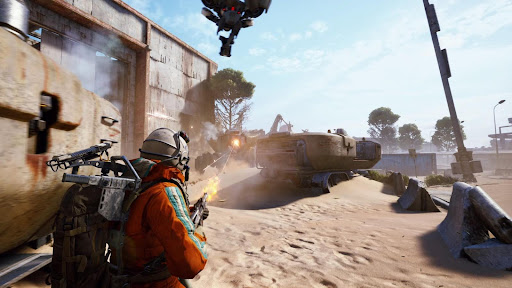
The surface looks incredible too. We’re talking Unreal Engine 5 doing heavy lifting on post-apocalyptic Italy. Crumbling Roman architecture next to crashed futuristic tech. Forests reclaiming bombed-out cities. Rain storms that reduce visibility. It’s atmospheric in ways most shooters don’t bother attempting.
Why Steam Can’t Get Enough
Alinea Analytics dropped some numbers that caught everyone off guard—12 million copies sold across platforms. But here’s the kicker: player counts went UP two months after release. Most games see a 60-70% drop-off by month two. ARC Raiders nearly doubled its playerbase instead.
That’s weird, right? Usually players try the new shiny thing, realize it’s shallow, and bounce. Not here. Something’s keeping people around, and I think it’s how the game handles your time. You can run a quick 20-minute surface trip during lunch. Or you can sink three hours into optimizing builds and tackling harder zones. Both feel productive.
The game also doesn’t demand you become an esports tryhard to have fun. Casual players and competitive types coexist pretty peacefully. Matchmaking does a decent job keeping things balanced, so you’re not constantly getting destroyed by people who’ve played 500 hours.
Plus—and this matters—it launched at $40. Not full AAA pricing. For people hunting deals, finding an ARC Raiders Steam key through legit retailers drops that even lower. When you can grab a cheap game key for a quality multiplayer experience, word spreads fast. Half my gaming group bought in during a sale and never looked back.
Combat That Rewards Thinking
Gunfights in ARC Raiders hit different. Yeah, you can spray and pray with an SMG, but you’ll probably die. The machines have patterns you need to learn. Small drones swarm and overwhelm. Medium mechs flank intelligently. The big ones? Those require strategy, not just bullets.
Your loadout options go beyond the standard rifle-shotgun-sniper trinity. Energy weapons exist. Railguns that punch through armor. Grenades that do more than just explode—some create smokescreens, others deploy barriers. You’ve got ziplines for vertical movement, traps for area denial, gadgets that change how encounters play out.
The augment system adds another layer. You’re not locked into a class. Instead, you customize perks across three skill branches: Survival (health, resistances), Mobility (speed, movement), and Conditioning (stamina, carrying capacity). Your build changes your playstyle completely. A Mobility-focused Raider plays nothing like a Survival tank.
Maps encourage experimentation too. Four distinct zones at launch, each with different terrain and challenges. One’s heavily forested with lots of cover. Another’s more open, punishing careless movement. Weather shifts mid-mission—suddenly that clear sightline becomes a foggy deathtrap. The environmental variety prevents the game from feeling repetitive even after dozens of runs.
The Loot Loop That Works
Here’s where extraction games usually fall apart. You grind for loot, extract it, and then… what? Stare at your inventory? ARC Raiders connects everything. Items you extract get sold to traders in Speranza. That currency buys blueprints, upgrades your workshop, unlocks better gear. Better gear lets you tackle harder zones. Harder zones drop rarer loot. The cycle feeds itself without feeling pointless.
Crafting isn’t overly complicated either. You’re not managing 47 different resource types. The system gives you meaningful choices without drowning you in spreadsheets. Want better armor? You’ll need specific materials from specific zones, which means planning your runs around objectives beyond just “grab everything shiny.”
Traders in Speranza hand out quests that add purpose to your expeditions. These aren’t generic “kill 10 robots” tasks. The missions tell stories about Speranza’s factions, the politics underground, and what people are willing to risk for survival. Completing quests unlocks new equipment and expands your understanding of the world.
Solo or Squad—Your Choice
Cross-play works across PlayStation 5, Xbox Series X|S, and PC. No walls between platforms. Your Xbox friend, your PlayStation buddy, and you on PC can all squad up without technical headaches. The implementation’s smooth too—I haven’t seen the connection issues that plague other cross-play games.
Running solo is totally viable if you prefer it. The game scales difficulty, though going alone definitely increases the challenge. There’s something uniquely tense about being solo with a backpack full of legendary gear, trying to reach extraction while avoiding both robots and other player teams. High risk, high reward.
Three-player squads are where coordinated tactics shine. Good communication turns risky runs into smooth operations. You can split roles—one person scouts, another handles heavy combat, the third manages loot. Or everyone can spec differently and cover each other’s weaknesses. The flexibility makes squad play feel fresh even after you’ve run the same map repeatedly.
Developers Actually Care
Embark Studios shipped the game in solid condition—no massive day-one patch disaster. Since launch, they’ve consistently pushed updates addressing community feedback. The recent Cold Snap seasonal content added new challenges and cosmetics, showing they’re invested in long-term support.
Their roadmap extends through 2026 with concrete promises: additional maps, new enemy variants, expanded quest lines, fresh challenges. More importantly, they’ve demonstrated responsiveness to player concerns. When issues crop up, fixes follow within reasonable timeframes. That builds trust between developers and community.
The game feels like it’s being built alongside its playerbase rather than pushed out and abandoned. For multiplayer games in 2025-2026, that approach isn’t guaranteed. Plenty of studios launch titles and immediately move on to the next project. Embark seems genuinely committed to growing ARC Raiders into something sustainable.
What Makes It Click
After putting serious time into this game, I think its success comes down to focus. It’s not trying to be everything to everyone. Embark identified what makes extraction shooters compelling—tension, risk/reward, progression—and built around those pillars without unnecessary bloat.
The sound design deserves mention. Footsteps matter. You hear machines before seeing them. Gunfire echoes realistically, helping you locate threats. Audio cues provide critical information during tense moments. It’s details like that which separate good shooters from great ones.
Visually, the game nails its aesthetic. Post-apocalyptic settings often look samey—brown rubble, gray skies, depressing ruins. ARC Raiders injects color and variety. Sunlight breaking through storm clouds. Vibrant plant growth reclaiming cities. The contrast between dead machines and living nature creates striking imagery.
Community response backs this up. Player reviews consistently praise the gameplay loop, visual design, and developer support. The game maintains high ratings across review platforms. People aren’t just buying it—they’re recommending it to friends, creating content around it, and forming dedicated groups.
Whether you’re experienced with extraction shooters or this is your first, ARC Raiders accommodates both. The skill floor is accessible enough for newcomers. The skill ceiling is high enough that veterans find challenges. Securing an ARC Raiders Steam key or tracking down a cheap game key gets you into an active, growing community without the sticker shock of most AAA releases.
Why This Matters
The multiplayer gaming space is crowded and unforgiving. Dozens of titles launch yearly promising to be “the next big thing.” Most disappear within months. Players have seen enough shallow live-service games to be justifiably skeptical of new entries.
ARC Raiders broke through that skepticism by delivering substance. The core gameplay loop works. The world feels lived-in. Progression systems respect player time. Pricing is fair. Developer support is consistent. These aren’t revolutionary concepts—they’re just executed well.
What’s impressive is the sustained growth. Launch numbers don’t mean much anymore. Any game with decent marketing can spike initially. Retention tells the real story, and ARC Raiders is retaining players at rates most competitors would envy. The Steam concurrent player counts two months post-launch rival or exceed the launch numbers of several “major” releases.
That organic growth suggests something genuine is happening. Players aren’t sticking around because of FOMO or aggressive monetization. They’re staying because the game is fun and continues improving. Word-of-mouth marketing is driving new players in while existing players remain engaged.
Final Take
ARC Raiders represents what happens when developers respect their audience. No predatory monetization schemes. No releasing half-finished products. No abandoning the game after launch. Just a well-made extraction shooter that knows what it wants to be and executes that vision competently.
The game’s popularity on Steam isn’t accidental or manufactured. It’s earned through solid gameplay, fair pricing, and consistent support. The underground city of Speranza feels more alive with each update. The surface remains dangerous and rewarding. The community continues growing.