
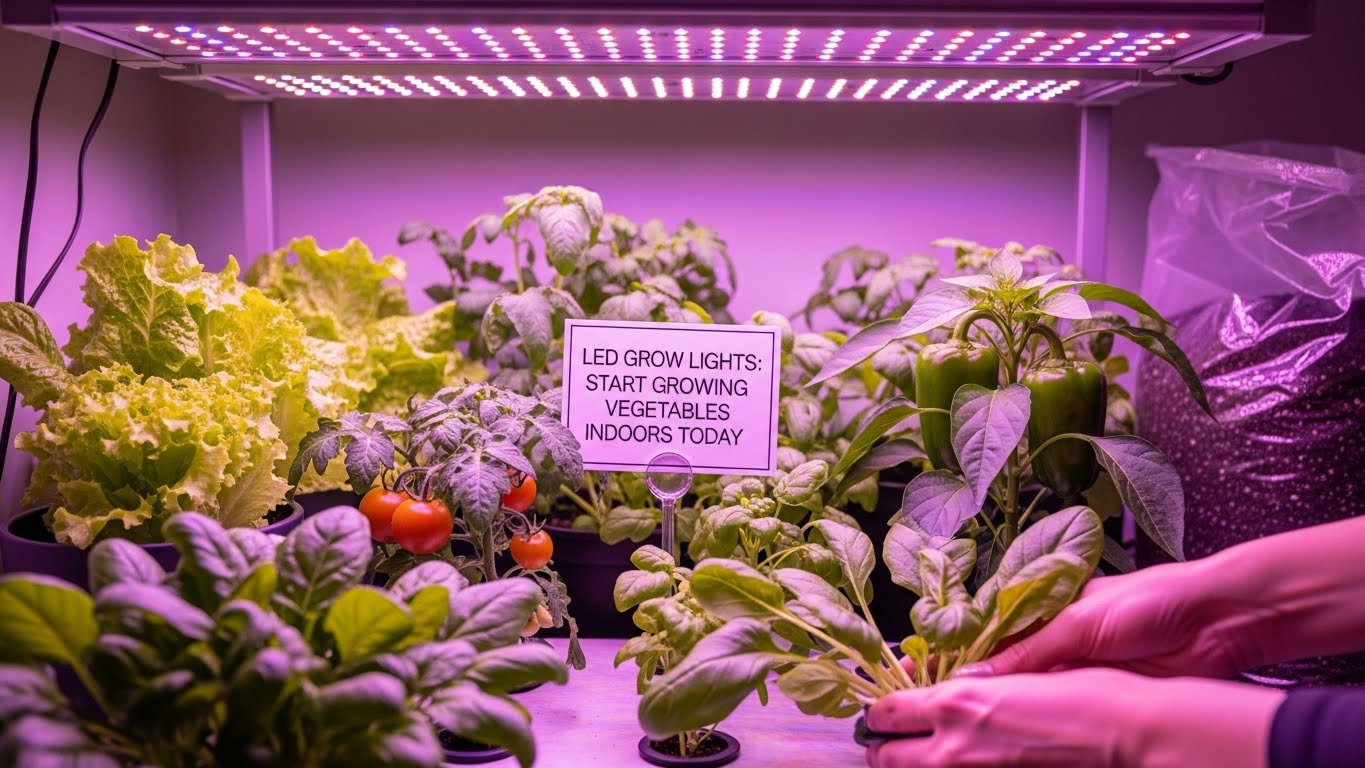
LED grow lights are light fixtures designed to help plants grow indoors. They mimic natural sunlight using light-emitting diodes. Plants need light to survive. LED grow lights replace sunlight in homes and farms. Unlike old fluorescent or incandescent bulbs, LEDs last much longer. They also use far less electricity.
Why does this matter? Indoor growing is becoming popular. People want fresh vegetables year-round. They want herbs in winter. They need reliable light sources. LED grow lights solve this problem.
How LED grow lights work for your plants:
- Emit specific light colors plants actually use for growth
- Turn electricity into light more efficiently than older technologies
- Stay cool during operation reducing heat stress
- Last for thousands of hours without replacement
- Give growers complete control over light conditions
Why Plants Need the Right Light
Plants don’t use all light equally. Different colors do different jobs. Understanding this changes everything about indoor growing. Your plant success depends on getting this right. Wrong light wastes money and time. Right light produces healthy, productive plants.
Blue light creates strong stems and healthy leaves. Your plants grow bushy and compact under blue light. This happens during early growth stages. Red light triggers flowering and fruit production. Plants make bigger buds under red light. Yellow and green light also matter. They support overall plant metabolism. Full spectrum light contains all colors plants need. This mimics natural sunlight most closely.
Why light color matters for each growth stage:
- Blue light strengthens seedlings during their first weeks
- Red light increases flower and fruit production significantly
- Green light penetrates deeper into the plant canopy
- Full spectrum light supports all growth phases at once
- Color mixing lets you customize light for each plant
Key Light Measurements That Actually Matter
PAR stands for Photosynthetically Active Radiation. It measures light wavelengths plants use. This is more useful than lumens. Lumens measure what human eyes see. PAR measures what plants actually use. A light can be bright to your eyes. But plants might not use much of it.
CRI means Color Rendering Index. This number shows how accurately a light displays colors. Higher CRI means better color quality. Plants respond better to high CRI lights. R9 measures red color rendering specifically. Red is critical for flowering plants. R9 above 70 is excellent for growing. These numbers tell you if a light works well.
What these measurements mean for your growing:
- PAR above 300 µmol/m²/s supports most vegetable growth
- CRI above 90 ensures plants get full spectrum benefits
- R9 above 70 optimizes flowering and fruiting stages
- Low PAR means slow weak growth no matter the effort
- Cheap lights often have poor CRI and R9 ratings
How Light Intensity Affects Plant Growth
Light intensity is the brightness reaching your plants. Distance matters tremendously. Move a light closer and intensity increases. Move it farther and intensity drops. Different plants need different intensities. Leafy greens need less light than fruiting plants. Herbs fall in between.
Too little light creates weak, pale plants. They stretch trying to reach light. Too much light burns leaves and slows growth. Finding the right balance produces the healthiest plants. Most vegetables need moderate to high light. Seedlings need less. Mature fruiting plants need more. You can measure light intensity with affordable meters.
How distance and intensity work together:
- Decrease distance by half to quadruple light intensity
- Leafy greens thrive under 200-300 PAR levels
- Fruiting plants need 400-600 PAR for full productivity
- Seedlings do well with 150-250 PAR to prevent burning
- Adjust light height as plants grow and develop
Daily Light Cycles Matter for Growth Patterns
Plants need darkness as much as light. Sixteen hours of light with eight hours of darkness works for most plants. This photoperiod triggers normal growth patterns. Some plants are “short day” plants. They flower when nights get longer. Cannabis is famous for this. Other plants are “long day” plants. They flower with longer light periods. Many vegetables fall in this category.
Consistent timing trains your plants. They develop strong rhythms. Their roots grow better. Their stems strengthen. Their nutrient uptake improves. Irregular light timing stresses plants. Stressed plants grow slowly and attract pests. Simple timers automate your light schedule. This removes guesswork from growing.
Why daily cycles improve your results:
- Eight hours of darkness enables essential plant processes
- Consistent timing produces stronger, faster-growing plants
- Short day plants flower only with longer night periods
- Long day plants flower with extended light exposure
- Timers ensure you never forget to turn lights on or off
How LED Grow Lights Beat Older Technologies
Old HPS and metal halide lights waste enormous amounts of energy as heat. LED grow lights stay cool. Much of their energy becomes light. This efficiency saves money on electricity bills. It saves money on cooling equipment too. Your growing space stays comfortable. Plants don’t get stressed by excessive heat.
Old lights need frequent replacement. Bulbs burn out after a few months. LED grow lights last for years. Some operate for 50,000 hours or more. That’s five years of continuous operation. Fewer replacements mean less maintenance. Less maintenance means more time for plants.
Old lights emit fixed light spectrums. You’re stuck with what the manufacturer chose. LED grow lights let you pick specific colors. Many models have adjustable output. You match the light to your plant’s current needs. This control produces superior results.
Practical advantages of LEDs over old technology:
- Use 40-60% less electricity for same light output
- Last 10 times longer than HPS bulbs
- Run cool enough to reduce air conditioning costs
- Provide customizable light spectrums for specific plants
- Require less maintenance and fewer replacements
- Generate less heat stress on sensitive plants
- Work better for small spaces where heat is problematic
Brightness Controls Give You Growing Flexibility
Many quality LED grow lights have dimming features. Onboard dials let you adjust brightness manually. Some use 0-10V dimming for more precision. Dimmable lights cost more upfront. They pay for themselves quickly through flexibility. You can simulate natural light patterns. Morning and evening naturally have less light than midday. Your plants respond better to this variation.
Early seedlings need less intense light. Dimming protects them from burning. Mature flowering plants need maximum light. Turning brightness up optimizes production. You match light intensity to each growth stage. This is impossible with fixed-brightness lights.
How dimming improves your growing outcomes:
- Start seedlings at 30-50% brightness to prevent damage
- Gradually increase to full brightness over two weeks
- Dial back to 70% during hot days to reduce heat stress
- Use full brightness for flowering stage maximum production
- Programmable dimming automates seasonal light changes
- Lower electricity use during off-peak hours with dimming
Different Plants Need Different Light Approaches
Leafy greens like lettuce and spinach are forgiving. They grow under moderate light. They’re perfect for beginners. Herbs like basil and parsley also adapt well. Seedlings of any type need gentle light. Increase brightness as they mature. Fruiting plants like tomatoes and peppers demand more light. They need strong light to produce fruit.
Cannabis requires careful light management. It’s sensitive to light timing. Wrong schedules prevent flowering completely. Medicinal herbs often need stronger light too. Orchids prefer specific light recipes. Succulents like intense light. Shade-loving plants do fine with less intense light. Matching light to plant type is crucial. Wrong light wastes time and resources.
Light needs vary by plant category:
- Leafy greens: 200-300 PAR, 14-16 hour days
- Herbs: 250-400 PAR, 14-16 hour days
- Seedlings: 100-200 PAR at greater distance
- Fruiting plants: 400-600 PAR, 14-16 hour days
- Cannabis: Exact photoperiod timing for flowering
- Flowering plants: Strong red spectrum emphasis
- Shade plants: 150-250 PAR, lower intensity
Choosing Between Different LED Grow Light Types
Panel lights are rectangular and mount flat. They work well for small growing spaces. They distribute light evenly. Cost per unit is reasonable. Cooling is simple since they run cool. Spaces up to 2×2 feet work great. Cost per unit is affordable.
Bar lights are linear and modular. You arrange them in patterns. They work for larger spaces. They let you customize coverage. They’re ideal for commercial operations. They cost more per unit. Installation is more complex.
UFO lights are circular and compact. They hang directly over plants. They work for tight spaces. Coverage is concentrated. They’re great for single plants or small corners. They look unusual but perform well.
Comparing light types for your space:
- Panel lights suit beginners and small spaces best
- Bar lights work for medium to large operations
- UFO lights perfect for single plants or tight corners
- Round reflector lights offer directional light control
- Tube lights mount horizontally for even coverage
- Choose based on your exact growing area size
Calculating How Many Lights You Actually Need
Space dimensions matter greatly. A 2×2 foot area needs one quality 250-300 watt light. A 4×4 foot area needs 500-600 watts. A 4×8 foot area needs 800-1000 watts. These numbers work for most crops. Leafy greens use less. Fruiting plants use more. Light distribution matters too. Even coverage beats bright spots with dark areas.
Calculate your space in square feet. Multiply by 30-50 watts per square foot. This gives you a target wattage. Choose lights rated close to that number. Plan for future growth. Buying extra capacity prevents needing upgrades. It’s cheaper to buy once correctly. Undersized lights frustrate growers. Oversized lights increase costs unnecessarily. Balance is key.
How to calculate your light needs:
- Multiply growing area length by width in feet
- Multiply total square footage by 35-45 watts
- This gives approximate total wattage needed
- Add 20% extra for efficiency and future growth
- Divide among available mounting points
- Ensure even light distribution across space
- Account for reflective surfaces that increase effective brightness
Common Mistakes to Avoid With LED Grow Lights
Wrong light distance kills more plants than anything else. Growers either put lights too close or too far. Too close burns seedlings immediately. Too far creates weak pale plants. Follow manufacturer distance recommendations. Adjust based on seedling response. This takes maybe two attempts to learn.
Inconsistent light schedules confuse plants. Timers solve this completely. Don’t trust yourself to remember daily. Timers are cheap and reliable. Use them. Improper watering is unrelated but common. LED lights expose watering mistakes faster. Poor soil drains or stays too wet under intense light. Fix watering before blaming the light.
Cheap lights seem economical initially. They burn out fast. They have poor spectrum quality. Results disappoint. Spending 20-30% more upfront saves money long-term. Quality lights last years. Cheap lights last months. Cost per year of quality lights is often lower. Invest in decent equipment once. Regret cheap equipment endlessly.
Mistakes that cost time and money:
- Placing lights wrong distance from plants
- Inconsistent daily light schedule without timers
- Using cheap low-quality lights that burn out
- Wrong light spectrum for plant type
- Ignoring heat buildup in growing spaces
- Not monitoring plant response to light levels
- Running lights 24/7 instead of proper cycles
- Choosing lights based only on price
Final Thoughts on Growing with LED Lights
LED grow lights transform indoor plant growing. They provide reliable consistent results. They save money on electricity. They stay cool reducing heat management costs. They last years not months. Success becomes predictable not random. Your plants thrive instead of struggle.
Starting requires modest investment. Quality lights cost real money. But results quickly justify costs. Your vegetables taste better and cost less. Your herbs grow abundant year-round. Your plants become reliable producers. Growing becomes enjoyable not frustrating.
The technology keeps improving. Lights become more efficient. Spectrum options expand. Prices drop yearly. Now is an excellent time to start. Better lights exist than five years ago. Prices are lower than before. Success is more achievable than ever. Your indoor garden is waiting.